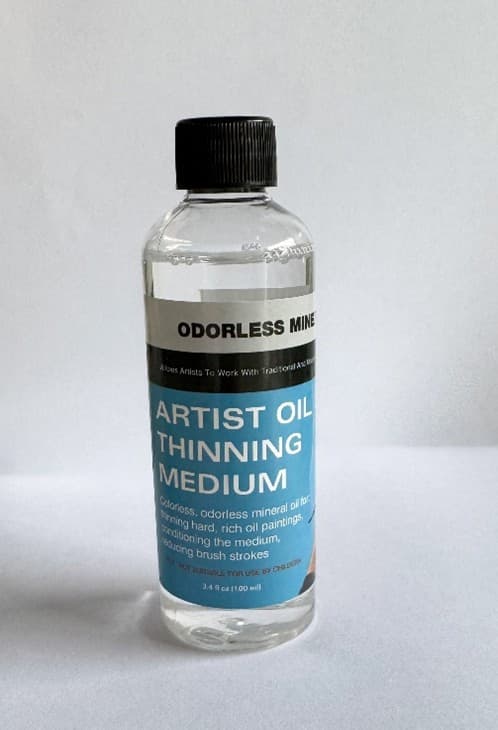
Liizousuda Paint Thinner (recalled). Photo: CPSC / Public Domain.
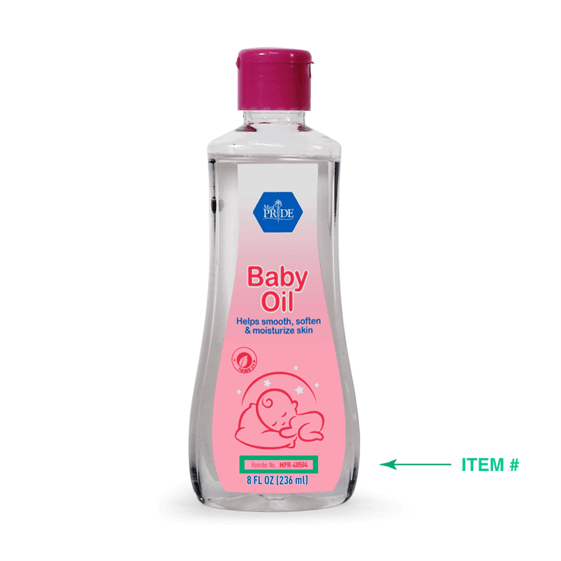
MedPride Baby Oil (recalled). Photo: CPSC / Public Domain.
A hospital operating room with medical equipment (representative file photo). Specific recalled device: see recall details below. Photo: FDA / Public Domain.
Recall Database
Poison & Chemical Hazards Recalls
This is a small hub — 27 records, 17 CPSC and 10 FDA — for poison and chemical hazards: household chemicals, carbon monoxide, lead, and toxic chemical exposure. These are products where the danger is what the product releases or contains rather than how it moves or breaks.
Most chemical and contamination problems in the feed are classified under the food or drug contamination hubs first; what lands here is the direct poisoning and chemical-exposure tail — recalled household chemicals, and products with a lead, carbon-monoxide, or toxic-chemical warning.
The notices span 2023–2026. Every row links to the CPSC or FDA notice with the recall reason and the remedy.
How this hub is built. This page groups the 27 recall records that 411 Press classifies as Poison & Chemical Hazards. Each record gets one primary hazard from a fixed, published rule set (taxonomy version 2026-07-28.C2.2 — this stamp marks when the classification rules last changed, not how current the recall data is; data currency is stated below). A record can carry secondary hazard tags but appears on only one hub. Regulators in this hub: CPSC (17), FDA (10). These notices were published 2023–2026. This is not an all-time archive — it is the current dataset, drawn from CPSC, FDA, and NHTSA notices and refreshed as new notices are ingested from the agency feeds, so it grows over time. A note on counting. This hub counts RECORDS, not recall events. The agencies package recalls differently — NHTSA issues one record per safety campaign, the CPSC one per recall, the FDA one per affected product line — so an FDA-heavy hub carries more product-line records per underlying recall than a CPSC or NHTSA one. Records here are grouped by hazard; the brand hubs, which rank companies, count by event instead. Every row links to the original agency notice. The agency's record is the authority; the hazard grouping is ours. For a small number of records the agency feed's own hazard text did not pass our integrity check; those rows read "See the agency notice for the hazard description" and link straight to the source, rather than show a summary we can't stand behind.
2026 (12)
- CPSCCritical
Liizousuda Paint Thinner
The paint thinner contains low-viscosity petroleum distillates, which must be in child-resistant packaging, as required by the Poison Prevention Packaging Act. The bottles are not child-resistant, posing a risk of serious injury or death from poisoning if the contents are swallowed by young children. Additionally, petroleum distillates can get into the lungs, causing chemical pneumonia and/or pulmonary damage, which can be fatal.
- CPSCWarning
MedPride Baby Oil
The baby oil contains low-viscosity hydrocarbons, which must be in child-resistant packaging, as required by the Poison Prevention Packaging Act. The baby oil's packaging is not child-resistant, posing a risk of serious injury or illness from poisoning if the contents are swallowed by young children. Additionally, petroleum distillates can get into the lungs, causing chemical pneumonia and/or pulmonary damage, which can be fatal.
- FDAClass I
INFINION CX LEAD KIT
Spinal cord stimulation system lead body may be exposed to stress at the anchor site. This may result in high impedance measurements or lead fractures, which may lead to inadequate stimulation, additional intervention, including lead explant and replacement.
- CPSCCritical
Rublev Colours Gum Turpentine and Mineral Spirits Bottles
The gum turpentine and mineral spirits contain turpentine and low-viscosity hydrocarbons, respectively, which must be in child-resistant packaging, as required by the Poison Prevention Packaging Act. The bottles are not child-resistant, posing a risk of serious injury or death from poisoning if the contents are swallowed by young children.
- FDAClass I
Pediatric care bed; Product Designation: KayserBett IDA
If the adjustment functions of the hand control, as instructed in the Manual, are not locked with the provided key when the patient (child) is unattended, there is an increased risk that the patient (child) or third parties (children) will operate the hand control and trap themselves or others under the bed frame or between the bed frame and the floor. This can lead to serious injuries or even death of the patient (child) or third parties (children).
- FDAClass I
Automated Impella Controller (AIC); Product Code: 0042-0000-US
A retrospective review identified that there are AIC units requiring specific hardware updates to address potential safety concerns. These hardware updates have been implemented through Abiomed s servicing process; therefore, AICs that have not received service are pending these updates. Issue 1: The proximity of the internal Video Graphics Array cable to the Digital Signal Processor chipset on the Impellatronic printed circuit assembly could potentially result in Electrostatic Discharge coupling into the Digital Signal Processor which may interrupt motor controls. Issue 2: There is a potential for the Compact Flash Memory Card dislodgement due to external applied forces, which could result in AIC startup failures and data logging issues. Issue 3: Improper routing of the fan wire within the AIC could lead to fan wire damage, which may result in console boot-up failure. Issue 4: Potential capacitor related issues on the Power Battery Manager, including the potential for the capacitors to cause pump stop, purge stop, and/or single fan fuse failures.
- FDAClass II
epoc BGEM BUN Test Card (25 pk) for the epoc Blood Analysis System; Siemens Material Number (SMN): 10736515
Use of the affected product can result in discrepant low pH and measured Total Carbon Dioxide (mTCO2) results and corresponding calculated values in arterial, venous, and capillary patient samples. An erroneously low pH or mTCO2 reading can lead to inappropriate treatment of nonexistent acidosis (respiratory of metabolic) or missed diagnosis of alkalosis (a true high pH: respiratory or metabolic alkalosis), potentially causing harm through unnecessary interventions with the former or failure to deliver appropriate treatment with the latter.
- FDAClass II
Dimension Creatinine Flex reagent cartridge
Siemens Healthcare Diagnostics is recalling certain lots of Dimension Creatinine Flex reagent cartridge (Dimension CRE2) because a potential imprecision in the Dimension CRE2 quality control (QC) and patient sample results using lot numbers GA6307 and BA7005 on the Dimension System. This imprecision may lead to erroneously decreased or increased creatinine patient results
- CPSCInfo
Organic Zing Birch Oil Bottles
The essential oil bottles contain methyl salicylate, which must be in child-resistant packaging, as required by the Poison Prevention Packaging Act (PPPA). The bottles for the products are not child resistant, posing a risk of poisoning if the contents are swallowed by young children.
- CPSCInfo
Lotus Joy Organic Sweet Birch Essential Oil Bottles
The essential oil bottles contain methyl salicylate, which must be in child-resistant packaging, as required by the Poison Prevention Packaging Act (PPPA). The bottles are not child-resistant, posing a risk of poisoning if the contents are swallowed by young children.
- CPSCInfo
GM Gumili Wintergreen Essential Oil Bottles
The essential oil contains methyl salicylate, which must be in child-resistant packaging, as required by the Poison Prevention Packaging Act (PPPA). The packaging for the products is not child resistant, posing a risk of poisoning if the contents are swallowed by young children.
- CPSCCritical
Bazic Silicone Glue
The glue contains methanol, which must be in child-resistant packaging, as required by the Poison Prevention Packaging Act. The glue's packaging is not child-resistant, posing a risk of serious injury or death from poisoning if the contents are swallowed by young children. In addition, the glue violates the labeling requirements under the Federal Hazardous Substances Act because it is incorrectly labeled as "Non-Toxic" and because it lacks a "highly flammable" hazard statement.
2025 (8)
- FDAClass II
Jumbo RAW SHRIMP, All Natural, Chemical Free, No artificial ingredients, NET WT
elevated levels of chloramphenicol in frozen shrimp
- FDAClass II
Shrimp Paste (Klong Kone) 'M' , 16 oz, 24 count , PLastic Jar, 24 packages/ case
Product tested high for lead.
- FDAClass II
DPA161 Shrimp Paste (Klong Kone) 'L' , 32 oz, 12 count , PLastic Jar, 12 packages / cases
Product tested high for lead.
- FDAClass II
Cinnamon, Clear Plastic Container, 100G, UPC 6251136 034139
Elevated levels of lead.
- CPSCInfo
100% Natural Pure Gum Spirits of Turpentine Bottles
The recalled bottles contain turpentine, which must be in child-resistant packaging, as required by the Poison Prevention Packaging Act. The turpentine bottles violate the mandatory standard for child-resistant packaging, posing a deadly poisoning hazard to young children.
- CPSCInfo
Rinnai i-Series Plus gas boilers
The boiler door can fail to seal properly due to incorrect screws, allowing carbon monoxide (CO) gases to escape, posing a carbon monoxide poisoning hazard.
- CPSCInfo
Cabinet Health 4 oz. Refillable Medicine Bottles
The plastic lid's closure can degrade after repeated openings, causing the lid's child-resistance to diminish, posing a risk of poisoning, if the contents are swallowed by young children.
- CPSCInfo
Euqee Wintergreen Essential Oils
The essential oil contains methyl salicylate, which must be in child-resistant packaging, as required by the Poison Prevention Packaging Act (PPPA). The packaging for the products is not child-resistant, posing a risk of poisoning if the contents are swallowed by young children.
2024 (5)
- CPSCInfo
DeNova Detect Brand Combination Natural Gas and Carbon Monoxide Alarms
After alerting consumers to the presence of natural gas or carbon monoxide, the recalled alarm can go into sleep mode when the alert lasts less than four minutes. During this time, the alarms can fail to detect and alert consumers to a new incidence of natural gas or carbon monoxide, posing a risk of carbon monoxide poisoning.
- FDAClass II
Spice Powder, 4 oz, Plastic Bag
Lead level was higher than NYSAGM Standard.
- CPSCInfo
Essential Values Golf Grip Solvent and Golf Grip Kits
The recalled cleaning product violates the Federal Hazardous Substances Act because it is deceptively labeled as "Safe and Non-Toxic" and lacks the required cautionary statements for petroleum distillates, posing a risk of poisoning to consumers.
- CPSCInfo
Bracelet sold with Skechers Watch and Jewelry Gift Sets
The clasp on the braided black bracelet sold as part of the gift set contains high levels of lead and cadmium. Lead and cadmium are toxic and can cause adverse health effects in children.
- CPSCInfo
Heritage Store Hydrogen Peroxide Mouthwash
The recalled mouthwash contains ethanol in a concentration which must be in child-resistant packaging, as required by the Poison Prevention Packaging Act (PPPA). The packaging of the products is not child-resistant, posing a risk of poisoning if the contents are swallowed by young children.
2023 (2)
- CPSCCritical
ZLINE 30-inch, 36-inch and 48-inch RG gas ranges
The oven of the gas ranges can emit dangerous levels of carbon monoxide (CO) while in use, posing a serious risk of injury or death from carbon monoxide poisoning.
- CPSCInfo
Armstrong Air and Air Ease single stage gas furnaces
A component inside the furnace was improperly assembled, causing the furnace to produce high levels of carbon monoxide (CO) under certain operating conditions, which poses a risk of CO poisoning to the consumer.