Camp Lejeune Litigation: Settlements and Lawsuits Three Decades After
Three decades after Marines and their families drank contaminated water at Camp Lejeune, the Justice Department has paid roughly $571 million of $795 million in approved settlement offers — fewer than 1% of the ~407,000 administrative claims filed. Ongoing news coverage.
By 411 Press Legal DeskUpdated 9 min read
This is an ongoing story. 411 Press updates this coverage as the litigation develops. Last updated: May 28, 2026.
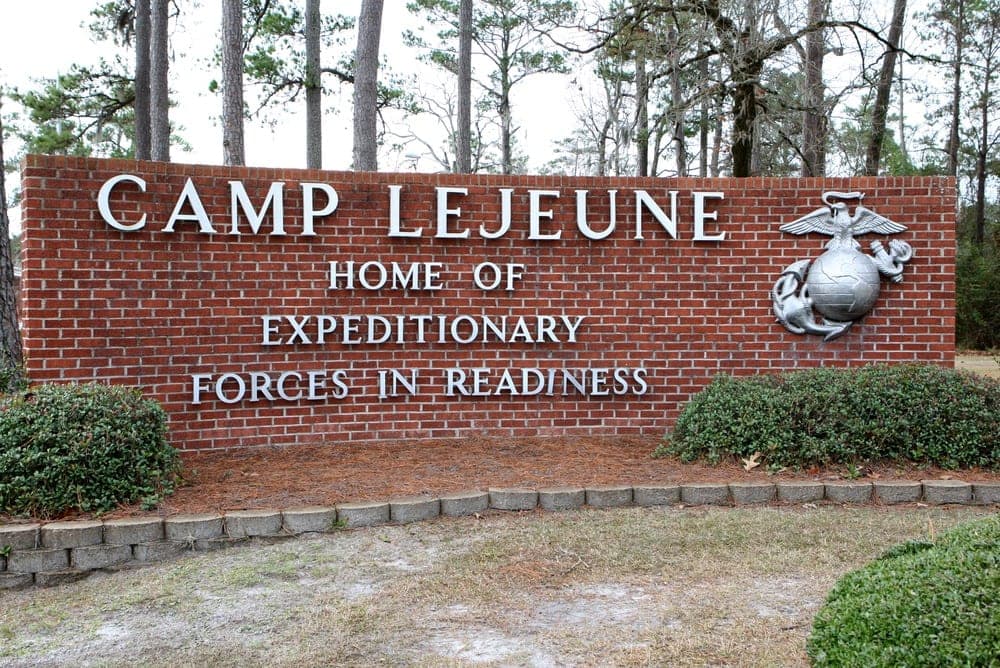
For 34 years, between 1953 and 1987, up to one million service members and their families drank, bathed in, and cooked with water contaminated by toxic industrial chemicals at Marine Corps Base Camp Lejeune in North Carolina. The water contained trichloroethylene, perchloroethylene, benzene, and vinyl chloride. All are known or probable human carcinogens.
The military knew. Testing in 1982 identified the chemicals. The last contaminated wells were not closed until 1987 — five years later. Veterans waited four more decades for the legal right to sue.
As of an April 13, 2026 federal court filing, roughly 407,000 administrative claims have been filed under the Camp Lejeune Justice Act with the Department of the Navy. The Department of Justice has approved approximately $794.7 million in settlement offers across about 2,686 approved offers and paid out $570.7 million. Fewer than 1% of filed claims have been resolved.
| Total Claims Filed | ~407,000 administrative claims (Navy, as of April 13, 2026) |
| Federal Lawsuits | 3,718 in the Eastern District of North Carolina |
| DOJ Settlements Approved | ~2,686 offers — approximately $794.7M total |
| DOJ Settlements Paid | Approximately $570.7M paid (as of April 13, 2026) |
| Average Elective Option Payment | ~$280,000 |
| Court | Eastern District of North Carolina |
| Filing Authority | Camp Lejeune Justice Act (PACT Act, Section 804) |
| Administrative Claim Deadline | August 10, 2024 (passed) |
Where the Settlements Stand
The Department of Justice administers the Camp Lejeune claims process through what it calls the Elective Option — a predetermined settlement track that pays based on diagnosis and exposure duration without requiring litigation. Claimants who decline the Elective Option, or whose administrative claims are denied, can pursue individual federal lawsuits in the Eastern District of North Carolina.
The Elective Option pays in tiered amounts. Tier 1 conditions — kidney cancer, liver cancer, non-Hodgkin's lymphoma, leukemia, bladder cancer — receive between $150,000 and $450,000 based on how long the claimant was on base. Tier 2 conditions — multiple myeloma, Parkinson's disease, kidney disease, and others — receive between $100,000 and $400,000. An additional $100,000 death supplement applies when the claimant died from a qualifying condition. The maximum Elective Option offer is $550,000.
As of early 2026, the average payment is approximately $280,000. Bladder cancer claimants are receiving the highest average amounts.
March 2026: DOJ announced $175 million in newly approved settlement offers over a three-week stretch — 649 offers — bringing the post-January 2025 total to approximately $421 million in payments. Cumulative approved offers since the Elective Option program launched in 2023 reached roughly $708 million across 2,531 settlements. The pace of resolution remains a fraction of the claims filed. Veterans' advocates have criticized the DOJ for resolving fewer than 1% of filed claims while expert discovery in the federal litigation moves forward in parallel.
April 2026: As of an April 13 federal court filing, cumulative approved settlement offers had grown to approximately $794.7 million across roughly 2,686 offers. Of those approvals, $570.7 million had been paid out. The gap between approved and paid reflects the time between a claimant accepting an offer and the Treasury disbursing the funds.
May 2026: Two settlement masters were appointed by the panel of four federal judges overseeing the federal litigation. Expert discovery across water contamination, general causation, and specific causation phases is largely complete. The litigation is moving toward bellwether trial preparation.
Published legal analyses project individual federal litigation settlement values ranging from $200,000 to over $1 million for the most severe cases. These are projections based on comparable toxic exposure litigation. They are not confirmed amounts.
Who Is Affected
The Camp Lejeune Justice Act covers anyone who lived or worked at Marine Corps Base Camp Lejeune for at least 30 cumulative days between August 1, 1953, and December 31, 1987. The affected population includes:
- Active-duty Marines and Navy personnel
- Reservists and National Guard members who trained at the base
- Civilian employees and contractors who worked on base for 30 days or more
- Family members who lived in base housing
- Children born during the residency period — including those carried in utero
The cancers documented in claims filed to date span bladder, kidney, liver, leukemia, multiple myeloma, and non-Hodgkin's lymphoma. Non-cancer claims include Parkinson's disease, aplastic anemia, myelodysplastic syndromes, kidney disease, liver disease, scleroderma, and neurobehavioral effects. Reproductive claims cover infertility, miscarriage, stillbirth, and birth defects in children carried or conceived during the exposure period.
The DOJ's Elective Option presumes a causal link between exposure and the qualifying diagnoses on its list. The presumption removes the need for individual claimants to independently prove causation for those conditions.
The Contamination Story
Camp Lejeune sits on 246 square miles along the North Carolina coast. For over three decades, the base's drinking water supply was contaminated by toxic industrial chemicals at concentrations hundreds to thousands of times above safety limits.
Testing confirmed four primary contaminants, according to the Agency for Toxic Substances and Disease Registry (ATSDR):
Trichloroethylene (TCE). An industrial solvent. Found at the Hadnot Point water treatment plant at concentrations up to 1,400 parts per billion — 280 times the current EPA maximum of 5 ppb. Classified as a known human carcinogen.
Perchloroethylene (PCE). A dry cleaning chemical. Contamination at the Tarawa Terrace water treatment plant was traced to ABC One-Hour Cleaners, an off-base dry cleaner whose waste seeped into the groundwater. Classified as a probable human carcinogen.
Benzene. From leaking fuel storage tanks. A known human carcinogen linked to leukemia and other blood cancers.
Vinyl chloride. A breakdown product of TCE and PCE in groundwater. A known human carcinogen linked to liver cancer.
The timeline of what was known and when:
1953. Contamination at the Hadnot Point treatment plant is now estimated to have begun, originating from leaking underground fuel storage tanks, industrial waste disposal areas, and a waste dump site on base.
1957. Contamination from the off-base dry cleaner began reaching the Tarawa Terrace treatment plant.
1982. During routine testing mandated by the Safe Drinking Water Act, TCE and PCE were identified in both the Hadnot Point and Tarawa Terrace water distribution systems. Base officials were notified.
1984-1985. Camp Lejeune officials shut down contaminated wells in stages. Some were not closed until January 1985 — nearly three years after the contamination was confirmed.
1987. The last contaminated wells were closed.
For those 34 years, the water flowed. Families used it for everything — drinking, cooking, bathing, filling swimming pools on base. Children grew up on it. Pregnant women drank it. Veterans recall being told the water was safe.
Why It Took So Long
The 35-year gap between the last contaminated well closing and the first lawsuit being possible is not an accident of bureaucracy. Two specific legal doctrines kept Camp Lejeune victims out of court.
The Feres Doctrine. A 1950 Supreme Court ruling that prevents active-duty military personnel from suing the federal government for injuries incident to service. The doctrine was designed for combat-related claims. Federal courts interpreted it broadly enough that it blocked claims from Marines exposed to contaminated water on base — the position being that exposure during military service, even to chemicals in the drinking water, was incident to service.
State statutes of limitations. Even for civilian dependents and contractors, North Carolina's statute of repose set a 10-year ceiling on filing claims after the harmful act. By the time the contamination was publicly acknowledged in the 1990s, that ceiling had long expired for most claimants.
Congress had to override both barriers. The Camp Lejeune Justice Act, signed into law in August 2022 as Section 804 of the PACT Act, created a specific federal cause of action that overrides the Feres Doctrine for Camp Lejeune exposure and waives the state statute of repose. Claimants had a two-year window — until August 10, 2024 — to file administrative claims.
The legislation passed because veterans' organizations spent more than a decade lobbying for it. Multiple federal investigations had already established the underlying facts. ATSDR studies confirmed the contamination, the chemical concentrations, and the elevated disease rates in the exposed population. The remaining question was whether Congress would create a path to compensation. It did, 35 years after the wells were closed.
Current Status
The federal litigation is moving toward bellwether trial preparation. Expert depositions for water contamination and general causation phases are complete. All motions for the water contamination phase have been filed.
In a procedural development that plaintiffs' lawyers called significant, the presiding judge struck DOJ expert Dr. Julie Goodman's reports after finding that substantive changes to the reports went beyond permitted minor edits. The ruling removed a defense expert from the case at a critical phase.
Plaintiffs have also filed a Supreme Court petition challenging the denial of their right to a jury trial under the Camp Lejeune Justice Act. The Justice Act provides for bench trials before federal judges, not juries. The outcome of the petition could reshape how Camp Lejeune claims are adjudicated.
The administrative claim window is closed. Federal lawsuits may still be filed by claimants whose administrative claims were denied or went unresolved.
More Coverage
Recent 411 Press reporting on the Camp Lejeune beat and adjacent military/government accountability stories:
Coverage tags: Camp Lejeune · PACT Act · DOJ · Veterans
Related litigation we are tracking:
- Ozempic / GLP-1 MDL — 3,722+ cases pending
- Hair Relaxer MDL — 11,526 pending cases
- Social Media Addiction MDL — 2,527 pending cases
- NEC Baby Formula MDL — $495M verdict upheld May 2026
411 Press monitors Camp Lejeune case developments and publishes updates as they occur. We'll publish more as we find out. For our reporting methodology and sourcing standards, see our editorial standards.
Sources: U.S. Department of Justice — Camp Lejeune SettlementsU.S. Department of Justice — Camp Lejeune Justice Act Claims (Civil Division)Navy CLJA Claims PortalATSDR — Camp Lejeune ChemicalsCamp Lejeune Justice Act (PACT Act, Section 804)Roll Call — Victims of Camp Lejeune's tainted water inch closer to amends (April 13, 2026)
Related coverage