Boeing's Safety Culture Remains Broken. The FAA's Oversight Isn't Much Better.
The NTSB determined Boeing's inadequate training and oversight caused the 737 MAX 9 door plug blowout. FAA audits found systemic quality failures. But accountability remains limited.
By 411 Press Newsroom3 min read
Correction (July 27, 2026): An earlier version said Alaska Airlines Flight 1282 had 174 passengers aboard. The flight carried 171 passengers and six crew members, 177 people in all.
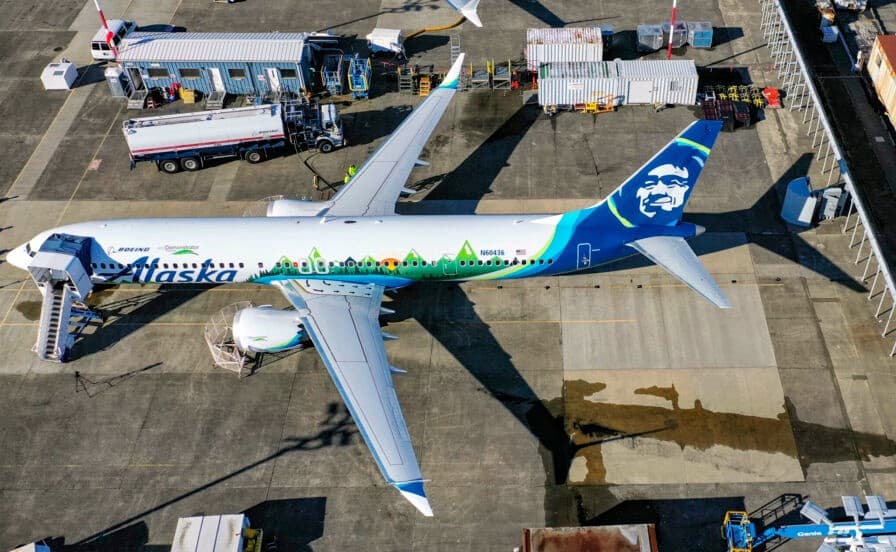
Four bolts. That is what held the mid-exit door plug in place on Alaska Airlines Flight 1282.
On January 5, 2024, those bolts were not there. The door plug blew out at 16,000 feet over Portland, Oregon, ripping a hole in the fuselage of a Boeing 737 MAX 9 with 171 passengers aboard. Seat cushions, clothing, and cell phones were sucked out of the aircraft. A 15-year-old passenger lost his shirt. Miraculously, no one died.
The National Transportation Safety Board determined the probable cause in June 2025: Boeing's failure to provide adequate training, guidance, and oversight to its factory workers. The bolts were never installed.
What the NTSB Found
Investigators recovered the door plug and examined it. The four bolts required to secure it to the airframe were missing before the accident. Without those bolts, the plug had been moving incrementally upward during previous flight cycles until it departed the aircraft during the accident flight.
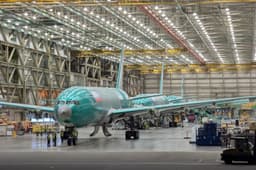
The NTSB traced the failure to Boeing's manufacturing process. During production at Boeing's Renton, Washington factory, the door plug was removed and reinstalled to address a separate quality issue. When workers put it back, they did not reinstall the retention bolts.
No record existed of the bolts being installed. No quality check caught the omission. The plane flew multiple revenue flights with an unsecured door plug.
FAA Audit Findings
The FAA's subsequent audit of Boeing's production line identified systemic non-compliance in three areas: manufacturing process control, parts handling and storage, and product control.
An FAA expert panel — mandated by Congress after the two fatal 737 MAX crashes in 2018 and 2019 — observed a "disconnect between Boeing's senior management and other members of the organization on safety culture." The panel reported that some workers feared retaliation for reporting safety issues.
The Department of Transportation's Office of Inspector General went further. Its report concluded that the FAA's own oversight processes for identifying and resolving Boeing production issues "are not effective."
Limited Accountability
Boeing's Organization Designation Authorization — the certification that allows it to self-inspect certain work — was renewed in June 2025 for three years. The renewal came with restrictions: FAA inspectors will be present during production, and surveillance at critical assembly stages will increase.
But Boeing is still building planes. The FAA capped production rates to stabilize quality, but the fundamental structure — a manufacturer that inspects its own work, overseen by an agency that has repeatedly failed to catch what the manufacturer misses — remains intact.
No Boeing executive has been criminally charged in connection with the door plug incident. The company entered a plea agreement related to the earlier 737 MAX crashes that killed 346 people in Indonesia and Ethiopia.
Why It Matters
The 737 MAX saga is not a story about one bad plane. It is a case study in what happens when production pressure overrides safety culture, when quality control becomes a paperwork exercise, and when the regulator relies on the regulated to police itself.
Four bolts were missing. Multiple systems — human, procedural, and institutional — failed to catch it. The question is not whether it can happen again. The question is what has structurally changed to prevent it.
Based on the evidence so far, the answer is: not enough.
For more accountability investigations, visit the 411 Press investigations hub.
Related coverage