Refinery Worker Killed In Hydrogen Sulfide Release At Catalyst Refiners In Nitro, West Virginia
A worker was killed in a hydrogen sulfide release at the Catalyst Refiners facility in Nitro, West Virginia. The CSB is investigating. H2S can kill at concentrations above 1,000 parts per million.
By 411 Press Newsroom3 min read
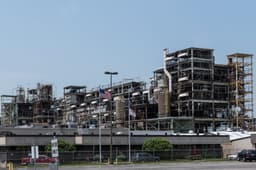
A worker was killed in a hydrogen sulfide release at the Catalyst Refiners facility in Nitro, West Virginia on April 22, 2026. The U.S. Chemical Safety and Hazard Investigation Board (CSB) opened a formal investigation.
The release occurred at approximately 9:32 a.m. local time. The fatality is listed on the CSB's current investigations page.
The worker's name and job title have not been publicly released.
Hydrogen sulfide kills quickly
Hydrogen sulfide (H2S) is one of the most lethal industrial gases. At concentrations above 1,000 parts per million, it can cause death within a single breath through olfactory paralysis followed by respiratory arrest. At lower concentrations it causes eye, throat, and lung irritation. The gas is heavier than air, so it pools in low areas — pits, tanks, basements, and confined spaces.
Refineries, oil and gas operations, sewage treatment plants, and certain chemical manufacturing facilities all routinely encounter H2S. OSHA's general industry permissible exposure limit (PEL) is 20 ppm, with a 50 ppm ceiling.
The Catalyst Refiners facility in Nitro processes hydrocarbon feedstocks. Hydrogen sulfide is a byproduct of several refinery processes.
What the CSB does
The CSB is a small independent federal agency. It investigates major chemical incidents at industrial facilities. It does not issue citations or fines — that is OSHA's job. The CSB produces detailed root-cause investigations and safety recommendations.
The CSB's report on the 2019 Philadelphia Energy Solutions refinery fire and the 2019 hydrogen sulfide release at the PEMEX Deer Park refinery in Texas (which killed two workers and injured 35) are recent examples of the agency's work in the refining sector. The PEMEX investigation specifically identified procedural failures in handling H2S-containing streams.
The Catalyst Refiners investigation will likely take 12 to 24 months.
What it will look at
CSB investigators will examine:
- The process where the release originated and the operating conditions at the time
- Whether the H2S detection and alarm systems were functioning
- Whether the workers in the area had personal H2S monitors and had been trained on the response
- Whether respiratory protection — supplied-air respirators rated for H2S — was available and used
- Whether the facility's process hazard analysis (required under OSHA's Process Safety Management standard, 29 CFR 1910.119) had identified the failure mode
- The facility's prior inspection and incident history
The United Steelworkers (USW) represents most U.S. refinery workers and has been a long-standing advocate for stronger PSM enforcement. The union has called for renewed emphasis on H2S protections after a series of recent incidents in the petrochemical sector.
Catalyst Refiners said it is cooperating with the CSB and OSHA. The plant's operations status has not been updated publicly.
The investigation continues. We'll publish more as findings are released.
Related coverage