House Passes Faster Labor Contracts Act 230–193 With 20 Republicans
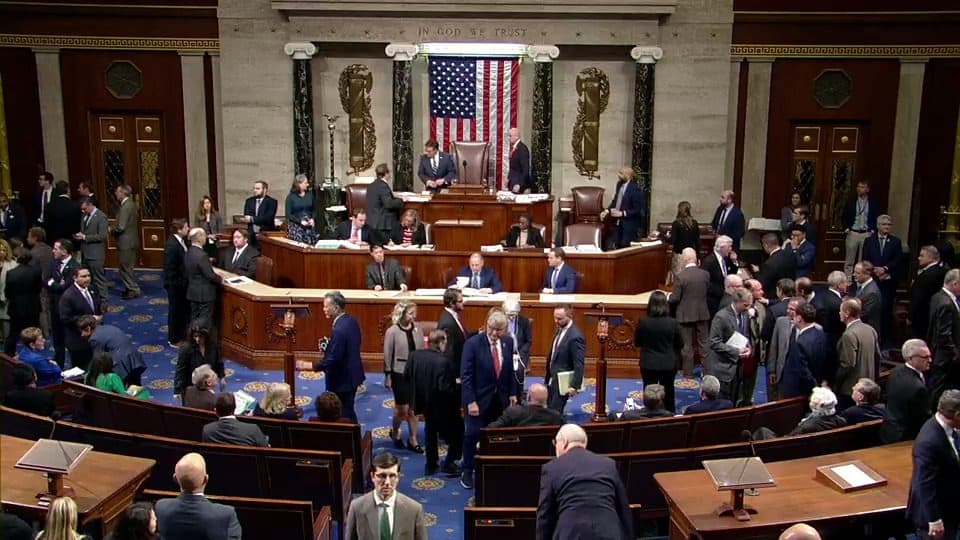
The U.S. House voted 230–193 on June 9 to pass the Faster Labor Contracts Act, a bipartisan bill that would set mandatory deadlines for first contract negotiations between newly organized unions and employers. Twenty Republicans joined 210 Democrats.
By 411 Press Newsroom3 min read
The U.S. House of Representatives voted 230–193 on June 9, 2026, to pass the Faster Labor Contracts Act (FLCA), legislation that would set binding deadlines for employers to reach first contracts with newly organized workers.
Twenty Republican House members joined 210 Democrats in the vote. The bill advanced using a discharge petition — a procedural maneuver that bypasses committee leadership when a majority of members sign — and now heads to the Senate.
What the bill would require
As passed by the House, the Faster Labor Contracts Act would:
- Require employers to begin bargaining with a newly certified union within 10 days of receiving a written request.
- Send the dispute to federal mediation if no agreement is reached within 90 days of the start of bargaining.
- If mediation also fails, refer the dispute to a three-person arbitration panel — one member chosen by each side and a neutral third — that would issue a binding decision setting the contract terms for two years.
The bill is co-sponsored by Rep. Donald Norcross (D-NJ) and Rep. Pete Stauber (R-MN).
The underlying problem
Labor researchers and union advocates have documented a persistent gap between winning a union election and securing a first contract. NPR reported that the average time from a union election to a first contract currently runs 465 days — more than a year in which workers operate under unchanged conditions after voting to organize.
Proponents say delay is itself a tool employers use to exhaust newly organized workforces. Opponents, including business groups and the companies directly affected, argue mandatory timelines and government-imposed contract terms would override legitimate disagreements about complex workplace terms, including wages, scheduling, and benefits.
The bill addresses the bargaining stage that follows a union win — the same stage where established unions still resort to leverage of last resort, as in the SoFi Stadium workers' contract fight ahead of the World Cup, the UAW Local 699 strike authorization at Nexteer in Saginaw, and the UAW strike at American Axle's Three Rivers plant.
Senate outlook
The FLCA now goes to the Senate, where its path is uncertain. A companion bill, S. 844, was introduced by Sen. Josh Hawley (R-MO) in March 2025 and remains in the Senate Health, Education, Labor and Pensions Committee. No Senate floor vote had been scheduled as of this report. The discharge-petition route taken in the House signals the bill lacked committee leadership support before reaching the floor; the Senate's procedural rules would require 60 votes to advance past a potential filibuster.
411 Press will track the bill as it moves through the Senate.
Sources: NPR — House approves bill to speed up union contract negotiationsCBS News — House passes pro-union bill after 20 Republicans defy partyTime — 20 House Republicans Break Ranks to Join Democrats in Passing Pro-Union BillRep. Jared Golden press release — House passes Golden-backed bill on first union contracts
Related coverage