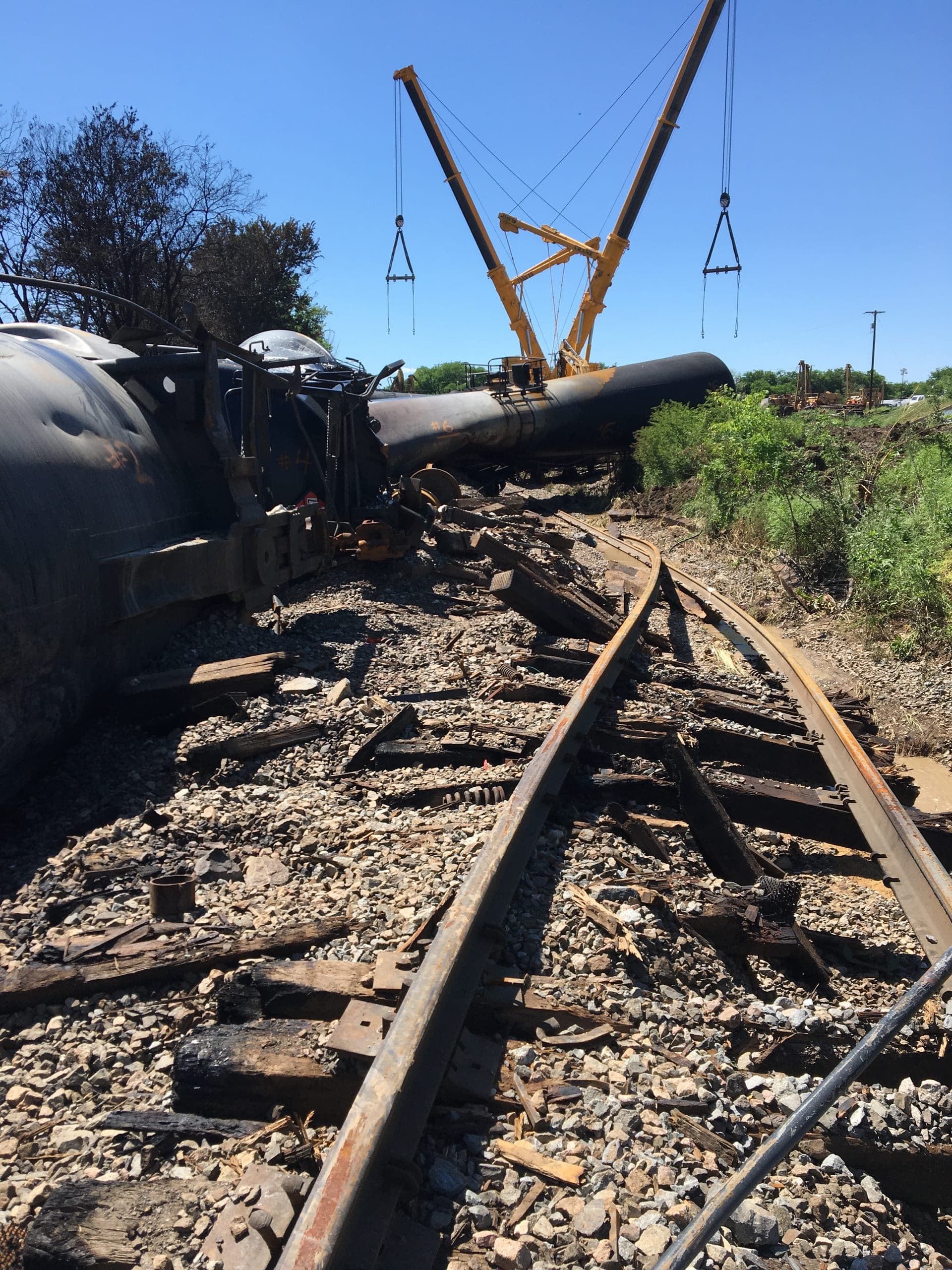
Union Pacific Derailment Releases 120,000 Gallons Of Ethanol Near Richmond, Texas
A March 18 Union Pacific derailment near Richmond, Texas, released about 120,000 gallons of ethanol from seven breached tank cars. The NTSB preliminary report is out.
By 411 Press Newsroom2 min read
Twenty-four Union Pacific railcars derailed near Richmond, Texas, on March 18, 2026. Eighteen of them were tank cars carrying hazardous materials. Seven were breached. They released approximately 120,000 gallons of ethanol.
No one was killed. No injuries were reported among the train crew or first responders. That's the only good news here.
The National Transportation Safety Board has now issued its preliminary report. Investigators are looking at track condition, train handling, and whether mechanical failure played a role.
What happened
The mixed-freight train was running through Fort Bend County, southwest of Houston, when the derailment occurred. Of the 24 cars that left the rails, 18 were carrying hazardous materials. Ten of those released some product. Seven tank cars had complete breaches.
Ethanol is flammable. A release at that scale, in a populated area, is a major incident — and the absence of a fire is part of what regulators want to understand.
Local emergency responders, the Texas Commission on Environmental Quality (TCEQ), and the U.S. Environmental Protection Agency were involved in the response.
Why this keeps happening
Union Pacific has had multiple hazmat-car derailments since 2023. The Federal Railroad Administration tracks these incidents in its public database. The trend line has not been encouraging.
The Brotherhood of Locomotive Engineers and Trainmen (BLET) and SMART-Transportation Division have both raised long-standing concerns about train length, crew size, and inspection frequency on Class I railroads. The industry has resisted federal mandates on two-person crews.
After the East Palestine, Ohio derailment in 2023, Congress introduced the Railway Safety Act. It has not been passed. Hazmat releases like the Richmond incident keep adding to the case for it.
What the NTSB will examine
The NTSB preliminary report sets the scope of the full investigation. The board typically takes 12 to 24 months to issue a final report. It will look at:
- Track condition and recent inspection records
- Train consist, including placement of tank cars within the train
- Crew handling and any anomalies in train operation
- Mechanical condition of the derailed cars
- Tank car design and whether the breached cars met current standards
Union Pacific said it is cooperating with investigators. The NTSB does not assign blame in its preliminary reports.
The full investigation continues. We'll publish more as findings are released.
Related coverage