Developing story
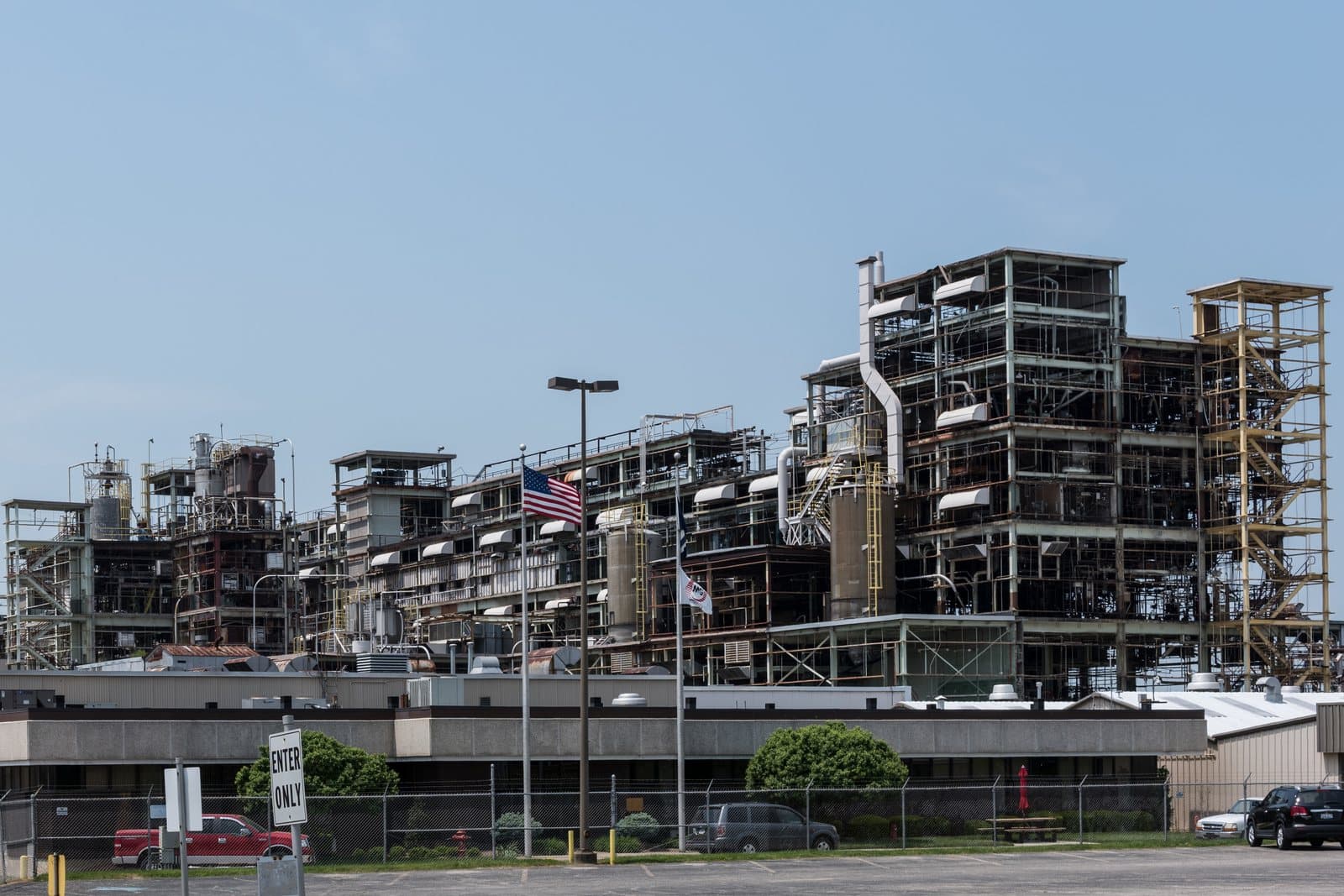
Two Workers Killed in Explosions at Brent Industries Textile Recycling Plant in Toledo
Heladio G. Perez, 46, and Mary Allen, 64, were killed in explosions at Brent Industries, an industrial textile reconditioning and recycling plant in Toledo, Ohio, on Aug. 18. The Lucas County Coroner's Office ruled both died of blunt force trauma. OSHA has opened an investigation.
By 411 Press NewsroomUpdated 6 min read
Developing story — 411 Press will update as the OSHA investigation proceeds.
Two workers were killed in a series of explosions at Brent Industries, an industrial textile reconditioning and recycling plant in south Toledo, early on Aug. 18. The Lucas County Coroner's Office identified them as Heladio G. Perez, 46, and Mary Allen, 64, and ruled that both died of blunt force trauma.
The first blasts came shortly before 5 a.m. at the plant in the 2900 block of South Avenue, during a shift change. Toledo Fire & Rescue officials said 12 workers were inside at the time. Most got out. Two or three suffered minor injuries, the Associated Press reported. Mayor Kapszukiewicz said about 100 Toledo fire personnel responded in some capacity, and 13ABC reported crews largely contained the fire by 6:15 a.m. No firefighters were hurt.
The workers
13ABC reported the identifications and the blunt-force-trauma ruling on Aug. 19, the day after the explosions; the coroner's office has not stated publicly when it released them. The station, which rendered the coroner's name for Perez as Heladio Garcia Perez, reported he was a Brent Industries employee.
Officials have not said publicly where in the plant either worker was when the blasts hit, what job either was doing, or how long either had worked there. Both were listed as unaccounted for through the first day. Crews could not reach parts of the building for hours: a section of roof was left cantilevered over a wall and at risk of falling, and fire was still burning in an area of the lot that was hard to get equipment to.
What the fire chief said about the tanks
Toledo Fire Chief Allison Armstrong said the blast ruptured tanks full of chemicals inside the building, which then toppled over, and that the plant's roof partially collapsed. The tanks held mineral spirits, fire officials at the scene said.
The order of events matters. The tanks failed because of the explosions; they are not established as the cause of them. Investigators have not determined what set the blasts off. There were no preliminary indications of a cause, and 36 hours in, investigators still had not been able to get inside the building to look for one. Arson investigators reviewed video footage for clues about where the blast originated. Fire crews were still putting water on the debris a day and a half later, both to stop reignition and to make the scene safe enough for investigators to enter.
The damage was severe. Aerial imagery showed nearly all of the building's roof gone and the walls blown out, the AP reported.
Why mineral spirits are the hazard in an operation like this
Brent Industries takes in work gloves, shop towels, wiping cloths and absorbent pads that come back from other industrial plants soaked in oil, grease and solvent, cleans them, and sends them back out. Mineral spirits — a petroleum distillate — is the solvent that does the stripping.
The danger in that process is the vapor, not the liquid in the tank. A flammable liquid gives off vapor that will ignite once enough of it collects in the air around an ignition source; OSHA's flammable-liquids standard, 29 CFR 1910.106, is written around that flashpoint threshold and around how such liquids are stored, vented and piped. Industrial washing and drying add both of the conditions that make vapor dangerous: heat, and an enclosed drum where vapor can accumulate.
That is the mechanism OSHA identified in the company's last fatal explosion.
Prior enforcement at Brent Industries
In 2004, OSHA cited the Toledo plant for two serious violations, including failing to protect workers from death or serious harm when they were exposed to a 207-degree Fahrenheit steam release from a washing machine, the Associated Press reported, citing OSHA records.
In 2017, the U.S. Environmental Protection Agency brought an administrative enforcement action against Brent Industries in Toledo under the Emergency Planning and Community Right-to-Know Act — the federal law requiring facilities to tell state and local emergency responders which hazardous chemicals they keep on site and how much. It was resolved through an expedited settlement agreement. EPA's docket for the case, EPCRA-05-2017-0015, records the matter closed on April 22, 2017, with the complaint dated April 24 and the disposition listed as payment received. That ordering is the docket's own, and is normal for expedited settlements, where the signed agreement predates the formal filing.
The company's Alabama plant had a fatal explosion and fire in 2015 that killed one worker. OSHA determined that flammable vapor from mineral spirits ignited in an industrial washing machine, and issued about half a dozen violations with a $27,000 fine, the Associated Press reported.
The company
Brent Industries was founded in 1977 in Brent, Alabama, the town it takes its name from, and runs plants in Brent and in Toledo. The company did not respond to repeated requests for comment from 13ABC about the explosions or about what comes next for the workers at the South Avenue plant.
What happens next
OSHA has opened an investigation. The agency has six months to complete it and said it will not release further information until it does.
Environmental monitoring has continued throughout. The U.S. EPA returned to the site on Aug. 19 to check air quality, and in an Aug. 21 update Toledo Fire & Rescue said the U.S. EPA and Toledo Environmental Services had been testing since the fire and found nothing of concern, with monitoring to continue as needed. The fire was substantially extinguished by then, though isolated areas were still smoldering.
That has not settled the question for people living around the plant. Kris Ramsdell, who lives about a block from the site, told 13ABC on Aug. 25 that he still did not know what he had breathed. "Since the explosion, I've woken up with a sore throat, minor headaches. We were breathing God knows what and nobody is telling us a thing," he said. "They absolutely owe it to the public to tell us what was on site and what we have been exposed to," Ramsdell said. He went to a doctor days after the blast and was told a link to air quality could not be established until EPA testing was finished. The EPA reported white smoke at the fire footprint the morning of Aug. 25 and slightly elevated particulate levels near the fence line along the railway ditch; after fire crews knocked it down around 10 a.m., monitoring showed no elevated particulate and the smoke dispersed. The agency said it will continue roving air monitoring around the site.
As of Aug. 26, no cause had been announced and no citations had been issued.
Explosions and fires inside processing plants run through 411 Press's industrial accident coverage this year. Griffin Darrow, 25, died of smoke inhalation in a February fire and explosion at Koch Foods' plant in Fairfield, Ohio, and a ship repair worker was killed in a May explosion at a Staten Island shipyard that also injured more than two dozen FDNY firefighters and EMS personnel.
We'll publish more as investigators release findings.
Sources: 13ABC — Authorities identify second person killed in explosion at Toledo industrial facility (August 18, 2026)13ABC — Investigation continues 36 hours after explosion, fire at Brent Industries (August 19, 2026)ABC News — Explosions tear through Brent Industries facility in Toledo (August 18, 2026)13ABC — No air or water quality concerns related to Toledo explosion, environmental testing shows (August 21, 2026)13ABC — Toledo neighbor demands answers after deadly Brent Industries explosion (August 25, 2026)Associated Press via Insurance Journal — Explosions and fire tear through Ohio industrial building, killing 2 workers (August 21, 2026)U.S. EPA — Administrative enforcement docket EPCRA-05-2017-0015, Brent Industries, Inc. (Toledo, Ohio)OSHA — 29 CFR 1910.106, Flammable liquids
Related coverage